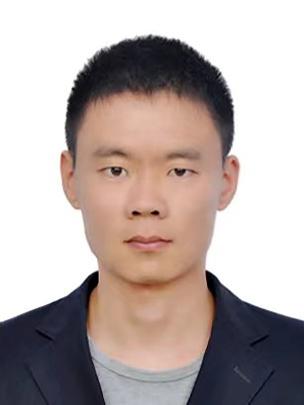
苏豪杰,男,博士,1989年11月生,河南省安阳市人,云南大学东陆青年学者,云南省兴滇英才支持计划青年人才获得者。现为生态与环境学院/高原湖泊生态与治理研究院副研究员、硕士生导师。
主要从事湖泊生态学方面的研究。先后承担完成了国家自然科学基金青年项目、国家自然科学基金面上项目、云南省科技厅项目等8项;在国内外核心刊物上发表学术论文50余篇,其中以第一或通讯作者在Trends in Ecology & Evolution, Global Change Biology(2篇), Global Ecology and Biogeography, The Innovation Geoscience, Ecology, Journal of Ecology (2篇), Functional Ecology(2篇), Limnology and Oceanography (2篇), Water Research (2篇)等国际权威期刊发表论文30余篇。2018年荣获中国科学院生态系统研究网络(CERN)十篇青年优秀学术论文。
主要学术贡献:(1)阐明了全球变化对多营养级生态系统功能的影响机制,突破了“单一压力-单一功能”的传统认知框架,为识别关键驱动因子与优化管理策略提供了新视角;(2)揭示了物种多样性和关键功能性状对生态系统多维稳定性的调控作用,突破了传统多样性-稳定性关系的认知局限;(3)构建了“营养级异步性-稳定性”理论分析框架,为理解复杂食物网的稳定性维持机制提供了新范式。
联系方式
E-mail: suhaojie@ynu.edu.cn
学历及工作经历(从本科开始按按时间正序填写)
l 2008.9-2012.6:河南大学生命科学学院生物技术专业,获理学学士学位
l 2012.9-2017.6:中国科学院水生生物研究所,水生生物学专业,获理学博士学位
l 2017.7-2021.10:北京大学城市与环境学院 博士后
l 2021.11-至今:云南大学生态与环境学院 副研究员
近十年主持或承担的科研项目(按时间正序填写)
l 2021.4—202021.11:淡水生态与生物技术国家重点实验室开放课题,项目负责人,经费10万元。
l 2021-2024:云南省科技厅项目:时间序列长度和物种多样性对高原湖泊生态系统稳态转换预警信号的影响,课题负责人,经费45万元
l 2022-2023:中国科学院战略性先导科技专项(B类):长江中下游湖泊鱼类捕捞量变化及其对生态系统的影响,课题负责人,经费40.7万元
l 2022-2024:国家自然科学基金青年项目:沉水植物密度和性状依赖的正反馈作用对湖泊富营养化的响应,项目负责人,经费30万元
l 2022-2024:云南大学高层次引进人才项目,项目负责人,经费100万元
l 2023-2026:云南大学生态学科群青年人才培养计划,项目负责人,经费60万元
l 2024-2027:国家自然科学基金面上项目:增温和富营养化对湖泊生态系统物种多样性,营养级异步性和群落稳定性的影响,项目负责人,经费50万元
l 2024-2028:云南省兴滇英才支持计划青年人才项目,项目负责人,经费80万元
获奖情况(按时间正序填写)
l 2019年获2018年度CERN十篇青年优秀学术论文奖(排名第一):Stoichiometric mechanisms of regime shifts in freshwater ecosystem.证书号:201807
以第一或通讯作者(含共同)发表学术论文:
1. Zhong, M., Xie, P.*, Feng, Y., Han, W., Du, E., Tian, D., Ma, R., Wang, Y., Jian, Z., Chen, J., Rao, Q., Sun, S., Wang, H., Jeppesen, E. andSu, H*. 2026. Global Warming Amplifies Nitrogen Over Phosphorus Limitation in Aquatic Ecosystems: A Multi-Trophic Meta-Analysis. Global Change Biol. 32(4), e70832.
2. Zhao, X., Sun, S., Chou, Q.*, Pang, W., Rao, Q.,Su, H.*, & Zhao, H. (2026). Submerged macrophytes promote nutrient use efficiency and growth by enhancing plant trait network connectivity with increasing sediment resources. Journal of Experimental Botany. doi:10.1093/jxb/erag098
3. Qin, Y., Cheng, C., Sun, S., Li, R., Zhong, M., Wang, Y., . . .Su, H.*(2026). Cyanobacteria relative biomass modulates the contrasting effects of species richness and evenness on phytoplankton resource use efficiency in a mesocosm experiment. Science of the Total Environment, 1047, 182033. doi:https://doi.org/10.1016/j.scitotenv.2026.182033
4. Li, R., Chen, J.*, Rao, Q., Sun, S., Wang, Y., Zhong, M., Chou, Q., Zhang, M.,Su, H.*and Xie, P. 2026. Trade-offs between diversity and stability mediated by positive cohesion in sediment microbiomes under algal blooms. Algal Research 95, 104617.
5. Rao, Q.,Su, H.*, Li, H., Sun, S., Chen, J., Xia, W., Cheng, C., Rao, X., Liu, J., Chen, J. and Xie, P.* 2026. Global Patterns of Ecosystem Multifunctionality Resistance under Global Change. Environ. Sci. Technol. 60(11), 8531-8541.
6. Cheng, C.,Su, H.*, Qin, Y., Peng, Y., Rao, Q., Sun, S., Li, R., Jian, Z., Zhong, M., Wang, Y., Wang, Y., Chen, J., Chen, J*. and Xie, P. 2026. Contrasting effects of producer and consumer resource use efficiency on trophic asynchrony and stability of food web under multiple stressors. Funct. Ecol.
7. Sun, S.,Su, H.*, Rao, Q., Chen, J., Qin, Y., Peng, Y., Cheng, C., Zhong, M., Ma, R., Wang, Y., Wang, Y., Jian, Z., Li, R., Wang, C., Chu, Y. and Xie, P. 2025. Beyond biodiversity: The more essential role of multi-trophic network complexity for predicting ecosystem multifunctionality under multiple stressors. Water Res. 286, 124216.
8. Chen, N., Li, W.*, Hu, S., Luo, R., Jiang, S., Liu, S., Li, N., Liu, X.,Su, H.*, Chen, Y., Zhong, J. and Dai, T. 2025. Water‑soluble phosphorus in submerged macrophytes reflects interspecific differences and environmental responses. Hydrobiologia.
9. Jian, Z., Zhong, M., Li, R.,Su, H.*, Rao, Q., Wang, Y., Wang, C., Sun, S., Chen, J. and Xie, P. 2025. Warming Enhances the Effects of Acidification on Aquatic Biota: A Global Meta-Analysis. Glob. Ecol. Biogeogr. 34(6), e70080.
10. Su, H., Zhou, L. and Xie, P. 2025. What can we learn from the loss of sharks? Trends Ecol. Evol. 40(6), 531-533.
11. Peng, Y., Xu, N.,Su, H.*, Rao, Q., Cheng, C., Chen, J., Wen, X.* and Xie, P. 2025. Dissolved organic carbon and microplastics decrease the biodiversity effect on resource use efficiency of crustacean zooplankton. Ecotoxicol. Environ. Saf. 298, 118290.
12. Yu, Y., Li, Y., Wang, H.*,Su, H.*, Rao, Q., Liu, Y. and Xie, P. 2025. Integrating water depth to predict the threshold of collapse and recovery of submerged macrophytes for lakes with large depth gradients. Frontiers in Plant Science Volume 16 - 2025.
13. Cheng, C., Si, W.,Su, H.*, Chen, J., Rao, Q., Lin, Y., Xu, S., Hua, Z., Peng, Y., Xu, N., Xie, P. and Chen, J*. (2024). Density-driven facilitations increase ecological resilience under eutrophic stress. Freshw. Biol. 69(12), 1773-1786.
14. Ma, R., Zhong, M., Rao, Q.*,Su, H.* and Xie, P. (2024). Effects of increased allochthonous dissolved organic carbon on the growth of planktonic biota in freshwater ecosystems: A meta-analysis. Limnol. Oceanogr.
15. Wang, C., Rao, Q., Chen, J.*,Su, H.*, Yang, Z., Zhang, M., Chang, F. and Xie, P. (2024). Cumulative effects of fish disturbance and vegetative propagules reduce the growth advantage ofVallisneria natans. Sci. Total Environ. 951.
16. Sun, S., Jian, Z., Rao, Q.*, Chen, J., Zhong, M., Wang, Y., Wang, Y., Chen, J., Xie, P. andSu, H.* (2024). Diversity of carbon cycle-linked phyllosphere microorganisms: A key driver of CO2flux in macrophyte-dominated aquatic systems. Water Biology and Security 3(4), 100289.
17. Rao, X., Chen, J., Wang, S.P.,Su, H.*, Rao, Q.Y., Xia, W.L., Liu, J.R., Fan, X.Y., Deng, X.W., Shen, H. and Xie, P.* (2024). Population asynchrony within and between trophic levels have contrasting effects on consumer community stability in a subtropical lake. J. Anim. Ecol., 93, 1593-1605.
18. Su, H., Li, Y., Zhong, M., Ma, R., Chen, J., Rao, Q., Feng, Y., Ma, S., Chen, J., Wang, H., Jeppesen, E. and Xie, P. (2024). No positive effects of biodiversity on ecological resilience of lake ecosystems. The Innovation Geoscience:100064. DOI: 10.59717/j.xinn-geo.2024.100064.
19. Cheng, C., Chen, J.,Su, H.*, Chen, J., Rao, Q., Yang, J., Chou, Q., Wang, L., Deng, X. and Xie, P*. (2023) Eutrophication decreases ecological resilience by reducing species diversity and altering functional traits of submerged macrophytes. Global change biology. https://onlinelibrary.wiley.com/doi/10.1111/gcb.16872
20. Rao, Q., Chen, J., Chou, Q., Ren, W., Cao, T., Zhang, M., Xiao, H., Liu, Z., Chen, J.,Su, H*. and Xie, P*. (2023)Linking trait network parameters with plant growth across light gradients and seasons. Functional Ecology 37(6), 1732-1746.
21. Su, H., Chen, J., Li, Y., Rao, Q., Luo, C., Deng, X., Shen, H., Li, R., Chen, J., Sun, Y., Pan, J., Ma, S., Feng, Y., Wang, H., Fang, J. and Xie, P. (2023)Carp stocking and climate change are potentially more important factors than nutrient enrichment driving water quality deterioration in subtropical freshwater lakes in China. Limnology and Oceanography 68, S131-S143.
22. Su, H., Feng, Y., Chen, J., Chen, J., Ma, S., Fang, J. & Xie, P. (2021) Determinants of trophic cascade strength in freshwater ecosystems: a global analysis. Ecology, e03370. https://doi.org/10.1002/ecy.3370
23. Su, H., Wang, R., Feng, Y., Li, Y., Li, Y., Chen, J., Xu, C., Wang, S., Fang, J. & Xie, P. (2021) Long-term empirical evidence, early warning signals and multiple drivers of regime shifts in a lake ecosystem. Journal of Ecology, 109(9): 3182-3194. https://doi.org/10.1111/1365-2745.13544
24. Su H.#, Pan J.#, Feng Y., Yu J., Liu J., Wang L., Li Y., Chen J., Wu Z., Ma S., Fang J., Xie P. (2021) Stocking alien carp leads to regime shifts in native fish populations: Evidence from long-term observation and ecological modeling of a Chinese reservoir. Ecological Indicators, 132: 108327.
25. Feng, Y.,Su, H.*, Tang, Z., Wang, S., Zhao, X., Zhang, H., Ji, C., Zhu, J., Xie, P., Fang J. (2021) Reduced resilience of terrestrial ecosystems locally is not reflected on a global scale. Commun Earth Environ 2, 88. https://doi.org/10.1038/s43247-021-00163-1
26. Chen, J., Liu, Z., Xiao, S., Chen, R., Luo, C., Zhu, T., Cao, T., Ni, L., Xie, P.,Su, H.* & Zhang, M*. (2020) Effects of benthivorous fish disturbance on chlorophyll a contents in water and the growth of two submersed macrophytes with different growth forms under two light regimes. Science of the Total Environment, 704, 135269.
27. Su, H., Wu, Y., Xia, W., Yang, L., Chen, J., Han, W., Fang, J. & Xie, P. (2019) Stoichiometric mechanisms of regime shifts in freshwater ecosystem. Water Research, 149, 302-310.
28. Su, H., Chen, J., Wu, Y., Chen, J., Guo, X., Yan, Z., Tian, D., Fang, J. & Xie, P. (2019) Morphological traits of submerged macrophytes reveal specific positive feedbacks to water clarity in freshwater ecosystems. Science of The Total Environment, 684, 578-586.
29. Su, H., Wu, Y., Xie, P., Chen, J., Cao, T. & Xia, W. (2016) Effects of taxonomy, sediment, and water column on C: N: P stoichiometry of submerged macrophytes in Yangtze floodplain shallow lakes, China. Environmental Science and Pollution Research, 23, 22577-22585.
30. 苏豪杰,吴耀,夏午来,等. 2017.长江中下游湖泊群落水平下沉水植物碳、氮、磷化学计量特征及其影响因素.湖泊科学, 2: 430-438.

